


PR in Gym: Achieve Personal Records & Boost Fitness

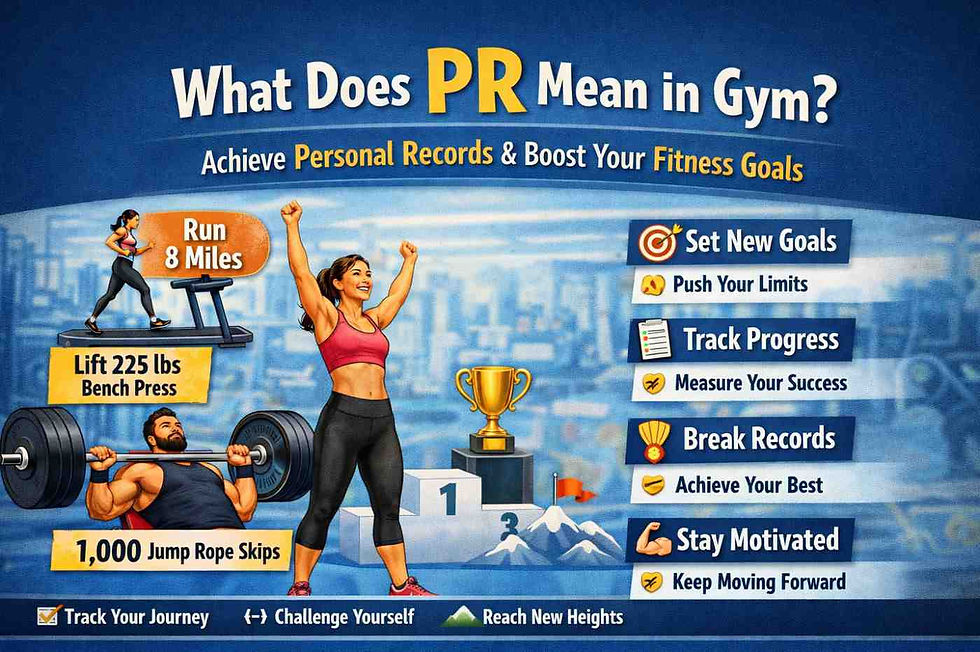
When you hear the term PR, you might first think of public relations or Puerto Rico, but in the context of gym and athletics, it means personal record. A PR is not just a number—it represents your best performance in a specific exercise or fitness challenge. It could be anything from lifting 225 lbs in a bench press to running 8 miles on a treadmill or completing a mile faster than before. Achieving a new PR is a tool for athletes to track their fitness progress and set specific goals. As you push yourself, whether it's on your 365th consecutive day of hitting the ice bath or setting a body transformation goal, PRs keep you focused. Tracking your personal journey and results helps you grow and stay motivated, ensuring you're always moving ahead, step by step. This mindset of care and consistent effort, along with the right strategies, is crucial to setting and breaking new PRs in your fitness journey. With the support of a strong team, including exercise pros and fitness influencers, your progress is measurable, and your results will reflect your dedication over months and years.
Introduction to Personal Record
In the world of gym workouts and strength training, a PR or personal record is more than just a number—it’s a milestone that reflects your best performance in a specific exercise or activity. Whether it’s lifting your heaviest weight in a bench press, hitting the highest number of reps, or finishing a challenging endurance task faster, a PR is a testament to your hard work and progress. Tracking your fitness journey and setting new fitness goals with each PR keeps you motivated to keep pushing yourself, moving toward new heights. It’s not just about lifting more or running faster, but about achieving personal development and gaining confidence in your abilities. As you continue your journey, every PR is a stepping stone, helping you to move ahead and achieve even greater achievements along the way.
Setting and Achieving Your Personal Record
To set and achieve a gym PR, it’s essential to track your progress over time. One of the most effective tips is to maintain a workout diary where you write down your achievements and any broken personal records. This helps you celebrate success and stay focused. Having the right mindset is also key—you need to believe in your strength and stay motivated. Many athletes use mantras to keep their minds positive and remind themselves of their abilities. Setting goals and competing with yourself can push you to surpass your previous record. Celebrate your wins, enjoy the process, and focus on your accomplishments. If your workouts become too complex or challenging, it may be time to seek a fitness coach for pointers to ensure you're progressing in a safe manner while mastering new workouts.
Types of PR
Weightlifting PR
A weightlifting PR is all about lifting your heaviest weight in a specific exercise, whether it's in a squat, deadlift, or bench-pressed. It’s an indicator of your maximal strength and helps you track your progress over time. For a weightlifter, achieving a PR is a great way to measure strength gains and see how far you've come. Your One Rep Max (1RM) is a common way to calculate your maximum weight for just one repetition, showing your strength and power. Tracking weightlifting PRs helps you push through a weight loss plateau and find effective ways to keep improving. While there are some differences in PR methods, the goal is always the same—making steady progress. If you're working on hitting a new PR, stay tuned for updates on your strength journey!
Repetition PR
A repetition PR focuses on how many times you can perform a specific exercise with a given weight before fatigue sets in. Whether it’s push-ups, squats, or any other movement, repetition PR is a key metric for gauging your muscular endurance and stamina. Tracking how many reps you can complete helps in gauging muscle growth and muscle development over time. As you increase reps, you're not just building strength, but also testing your endurance to push through physical limits. It’s an indicator of how far you've come, reflecting your progress and giving you something to aim for in your fitness journey.
Volume PR
A volume PR is a broader measure of your performance during a workout session, focusing on the total amount of work you’ve done. It’s calculated by adding the sum of all sets and reps across different exercises like squats, bench presses, or deadlifts. This comprehensive approach helps you assess your overall workout intensity and endurance. Tracking your volume PR gives you a clearer picture of how much work you're putting in, beyond just lifting heavier weights or completing more reps in a single set, allowing you to measure your overall progress more effectively.
Time PR
A Time PR focuses on achieving the best time or highest number of reps within a set time frame. This can be done with bodyweight exercises like burpees, sit-ups, or push-ups. For example, you might challenge yourself to complete as many push-ups as possible in 30 seconds or 60 seconds. A Time PR is a great way to test and improve your speed, agility, and muscular endurance. By pushing yourself to break your best time, you continuously improve and build greater physical capacity.
Cardiovascular PR
A Cardiovascular PR is about improving your ability to perform aerobic activities for extended periods without feeling fatigue. This can involve activities like cycling, swimming, or running, where the goal is to sustain a high-intensity activity over a longer time. Pushing your limits to work out longer and more efficiently not only helps you break your PR but also boosts your cardiovascular health. It’s a great way to track your progress in endurance and how well you’re building stamina through regular cardiovascular exercises.
Running PRs
For runners, a PR often refers to the best times achieved in different running events like a 5k race, marathon, or a sprint. It could also mean running a mile faster than ever before. Tracking these PRs allows you to gauge your speed and endurance over time, helping you measure your progress. Each new PR is a reflection of how far you've come, and it encourages you to keep pushing yourself to improve your performance in future races or workouts.
Personal Records (PR) That Go Beyond the Gym
PRs aren’t just about improving your workout performance—they can also apply to other areas of life where you aim to do better. Whether it’s achieving a goal, building new habits, or improving a skill, PRs can help you focus on tracking your progress. They require honest performance assessment and a strong sense of discipline in your efforts. Just like in the gym, setting and breaking PRs in other areas of life demands consistent training and commitment to personal growth. Achieving PRs beyond fitness shows how you can apply the same mindset to achieve success in any challenge you face.
Consistency Streaks PRs
PRs can also be about keeping up with a habit every day. This could involve something as simple as going for a run, taking a cold shower, or even going to bed at a specific time every night. The key is to create a positive habit that you practice regularly, like meditating for 5 minutes or working out in the gym for 30 days straight. By focusing on improving and sticking to your goal, you can build momentum and achieve a PR for consistent action. These regular practices help you grow, whether you're focused on fitness or developing better routines in other areas of your life.
Nutritional PRs
A Nutritional PR focuses on making better food choices and cutting out bad eating habits. For example, you might challenge yourself to stop snacking on Pringles while watching Netflix and replace them with a healthier option like carrots and hummus. You could also set a 21-day challenge to stick to a fitness routine and choose budget-friendly foods for a month. This is a healthier swap that helps you stay on track with your diet, while learning to stick with positive habits for a set period. Tracking these small improvements can be as rewarding as reaching any other PR in the gym.
Mental Health PRs
Mental Health PRs are about focusing on your mental well-being through small daily activities that help improve your mindset. For example, you might commit to writing down things you’re grateful for every day or starting a habit of journaling for a set period. Reducing time on social media or focusing on a healthier lifestyle can also have a positive impact on your mental state. These actions, although not physical, can positively influence your overall mental health and create PRs that support both your fitness and personal growth.
How does PR differ from 1RM?
A PR is about achieving your best performance in any exercise or activity, whether it’s lifting a certain weight, running a distance, or completing a set number of repetitions. On the other hand, 1RM refers specifically to the maximum weight you can lift for just one repetition of a given exercise. The main differences between PR and 1RM lie in the variety of achievements a PR can represent, while 1RM is solely focused on strength in terms of lifting maximum weight. 1RM is a specific measure, whereas a PR can be more broadly applied to any personal best performance.
PR (Personal Record)
A PR or Personal Record refers to your best performance in any exercise, whether it’s lifting weight, running a faster time, or swimming a longer distance. It’s about tracking and improving your results over time. For a weightlifter, this could mean lifting heavier weights than before, while a runner might aim to run a mile faster. A PR helps you measure progress toward your fitness goals and motivates you to keep improving in different aspects of fitness, from general fitness to specific endurance sports like cycling or swimming. It’s all about pushing yourself to reach new personal goals and constantly get better in whatever you do.
1RM (One-Rep Max)
1RM stands for One-Rep Max, which is the heaviest weight you can lift for one time in a specific exercise. It’s a common metric used to measure your strength and is essential for strength training. Athletes, especially in weightlifting or powerlifting, use 1RM to track how much maximum weight they can handle in a single go. It helps to set health goals and gives a clear idea of your strength level. By regularly testing and measuring your 1RM, you can focus on increasing strength and pushing your limit, which is key to improving in weightlifting workouts.
The Epley Formula to Convert PR to 1RM
The Epley formula is a widely used formula to estimate your 1RM based on your PR. It uses the Weight Lifted and Number of Reps to calculate your maximum weight that you can lift for one repetition. For example, if you lifted 100 lbs for 5 reps, the Epley formula can help you estimate your 1RM. This formula is simple to use and commonly applied in strength training. There are other variations, such as the Brzycki formula and Lombardi formula, but the Epley formula remains one of the most common methods for converting PR to 1RM.
NASM One Rep Max Calculator
The National Academy of Sports Medicine (NASM) offers a helpful tool called the One Rep Max Calculator. This tool uses formulas to estimate your 1RM based on your PR. For instance, if you can squat 150 lbs for several reps, the calculator will use a formula like the Epley formula to calculate your maximum weight for a single lift. This tool makes it easy to estimate your 1RM without having to test it directly, allowing you to track your strength progress and set realistic goals.
Competition PR
A competition PR is a personal record achieved during an official event or competitive setting. Unlike a regular gym PR, which is set during training sessions, a competition PR requires you to perform at your best performance under pressure, often in front of an audience and with competitors around. Whether it's a powerlifting meet, a CrossFit competition, or a race, this PR pushes your ability to new limits. It reflects your growth from consistent training, progressive overload, and mastering your technique. It’s not just about physical strength but also about mental readiness, preparation, and managing fatigue to achieve your fitness journey goals.
Mean in the Gym
A PR (personal record) is the best performance you've achieved in any exercise or activity. It can be lifting the maximum weight in a bench press, completing a jump rope challenge with 1000 jump rope skips in minutes, or achieving 5 reps with 200 pounds in a squat. It’s about pushing yourself to be motivated and striving for new goals, no matter your starting point. Whether you're a newbie or have more knowledge, PRs help you track your fitness journey and build confidence as you continue growing and celebrating your progress. By focusing on your fitness goals and pushing yourself to improve, you’ll stay motivated to reach new heights and achieve success.
Beyond the Numbers: The Broader Impact of Gym PR
A gym PR is not just a number—it’s a motivating tool that drives athletes to reach new milestones in their fitness journey. While achieving a PR in sports or workouts can be about lifting more or running faster, it also represents growth and success on a deeper level. It’s about friendly competition, whether with teammates, other gym-goers, or even self-competition. The physical difference you feel when breaking a PR is incredibly gratifying, and it shows just how capable you are. A PR creates strong bonds between athletes, motivates you to keep pushing, and reinforces the importance of tracking progress to truly measure success.


Comments